
Cooling insights
Public-facing explanations of how cooling demand increases across South Tyrol and what it means for each sector.
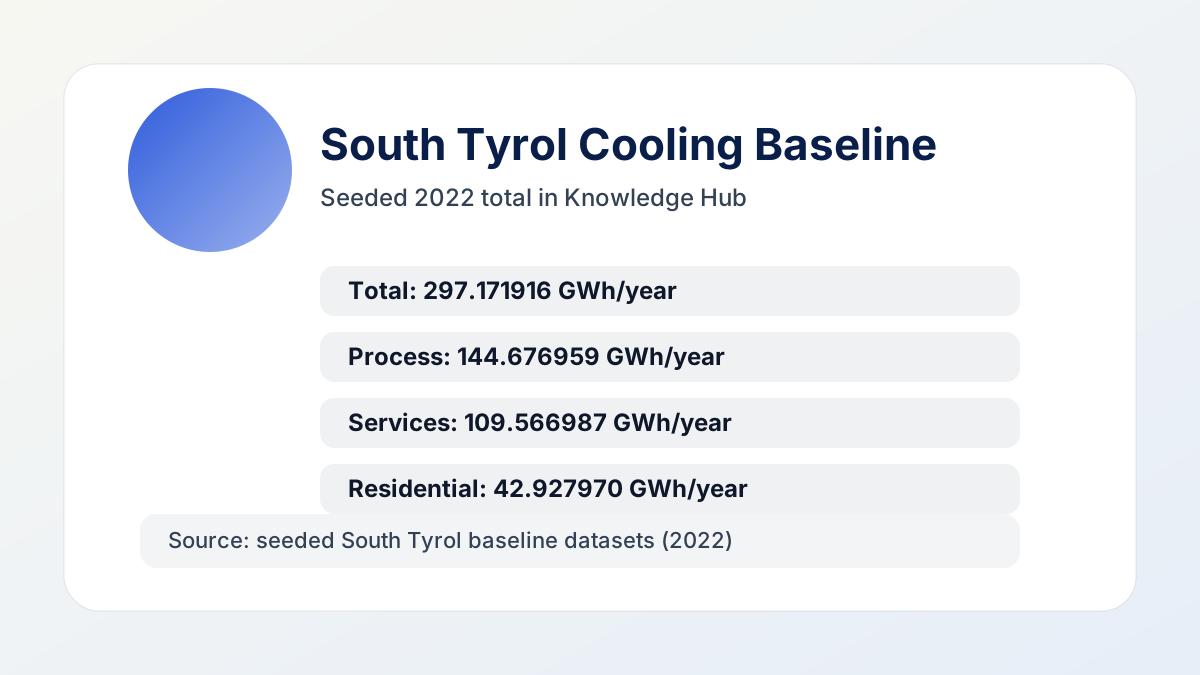
Cooling impacts in South Tyrol
Seeded 2022 baseline figures for cooling demand in South Tyrol and current coverage limits.
Read more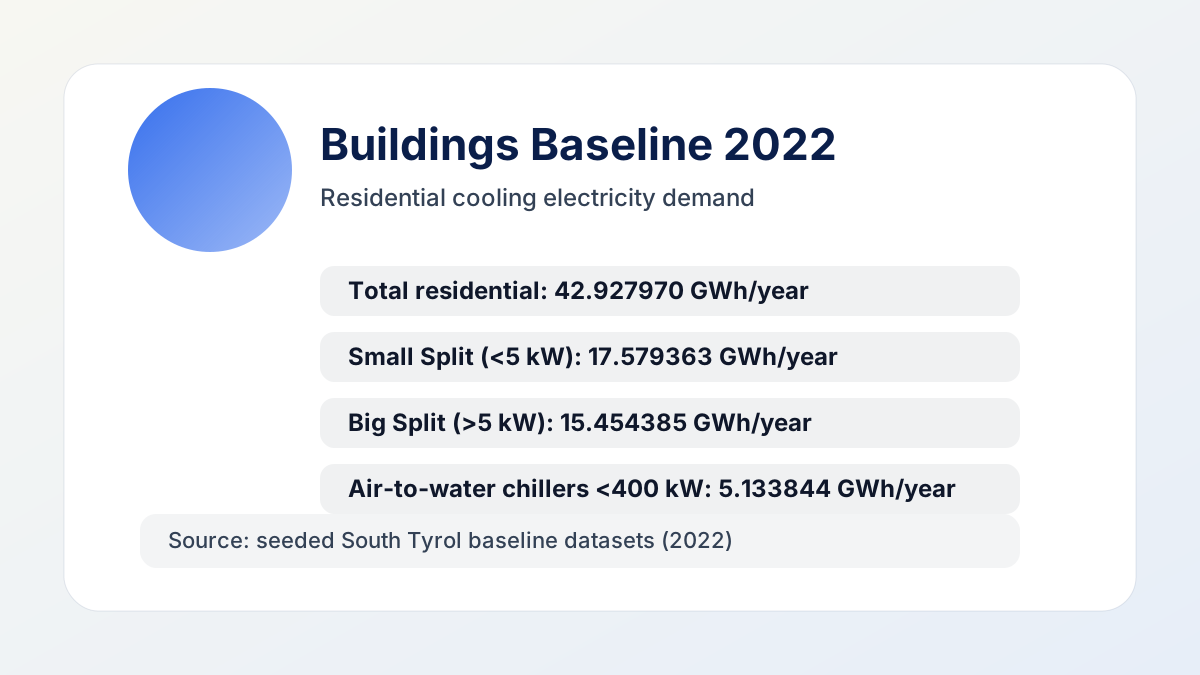
Buildings & housing
Seeded 2022 residential baseline: 42.927970 GWh/year with technology-level breakdown.
Read more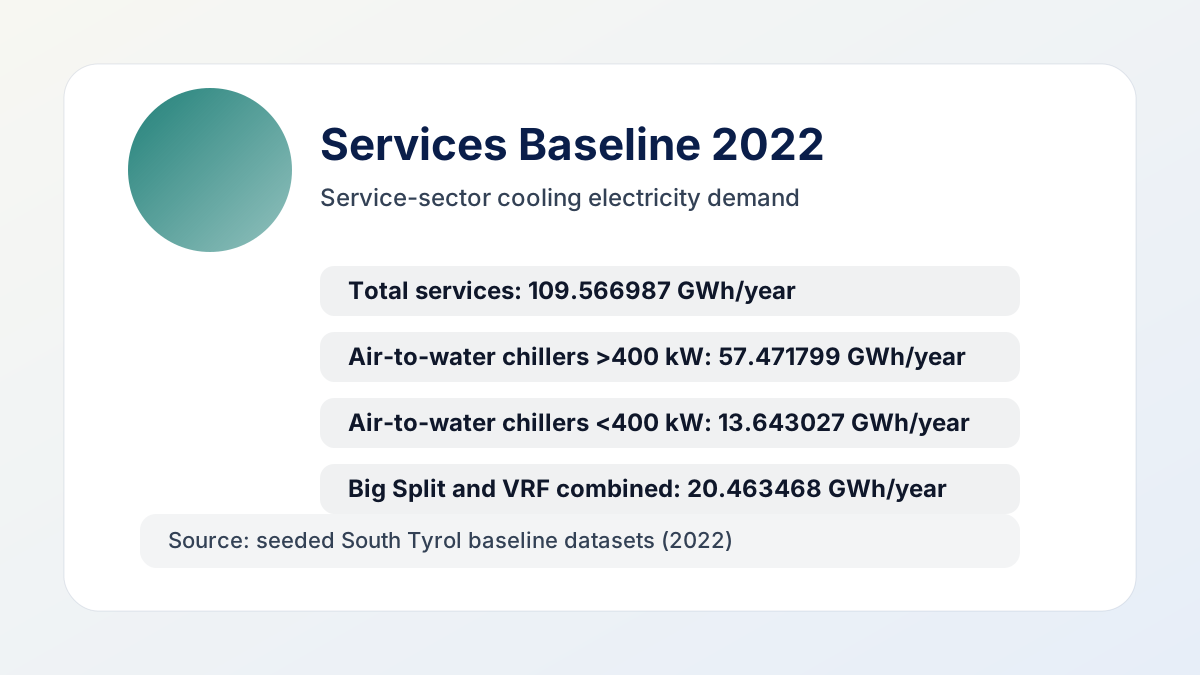
Services & tourism
Seeded 2022 service baseline: 109.566987 GWh/year, led by large chillers and split systems.
Read more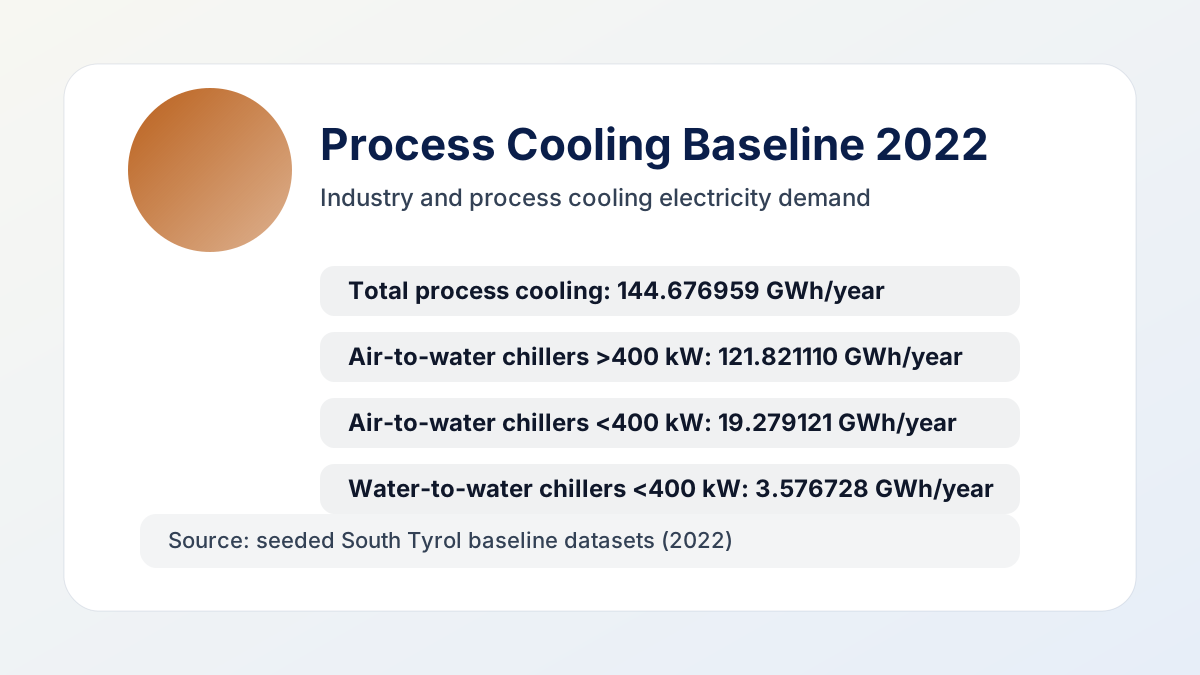
Industry & process cooling
Seeded 2022 process-cooling baseline: 144.676959 GWh/year, dominated by large air-to-water chillers.
Read more
Mobility & transport
Mobility baseline split is pending in current seeded baseline package.
Read more
Agriculture & food
Agriculture baseline split is pending in current seeded baseline package.
Read more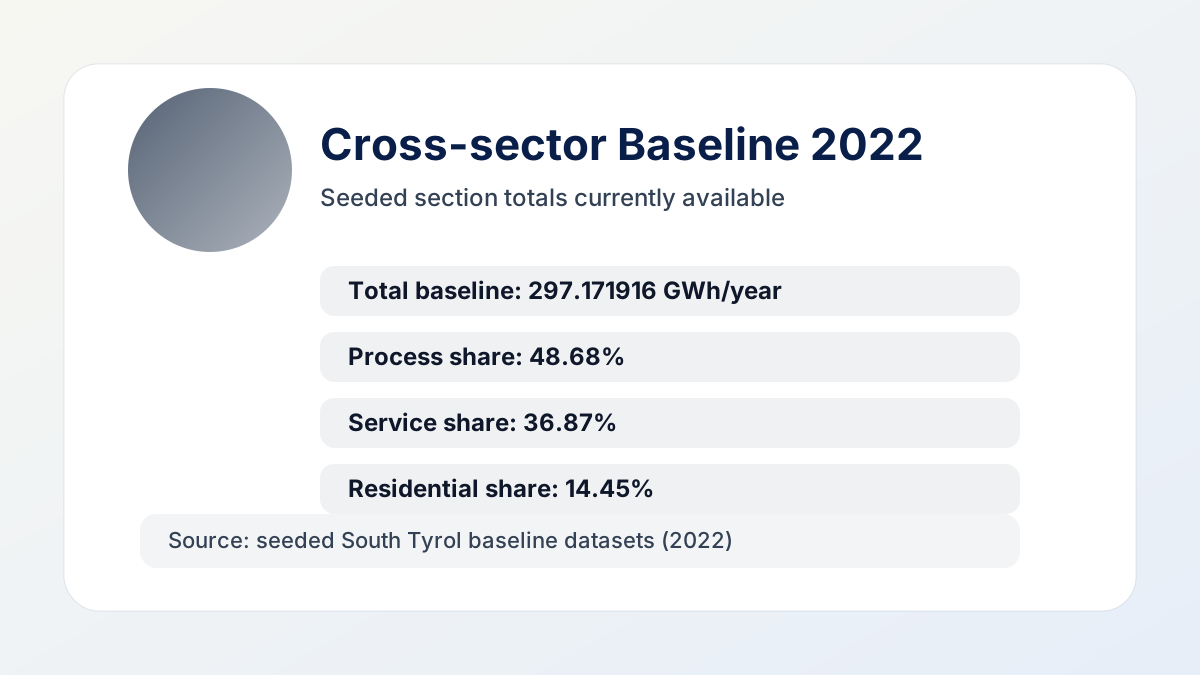
Cross-sector strategies
Seeded 2022 cross-sector baseline total: 297.171916 GWh/year with section breakdown.
Read more
Cooling risk maps
Heat exposure, cooling demand density, and vulnerable groups mapped for South Tyrol.
Read more
Passive cooling
Shading, ventilation, and reflective materials reduce cooling demand without extra energy use.
Read moreDemand response & load shifting
Shift cooling loads away from peak hours to reduce grid stress and costs.
Read more
Nature-based solutions
Green roofs, urban trees, and water bodies reduce urban heat and cooling demand.
Read more
Efficient systems & district cooling
High-efficiency equipment, heat pumps, and district cooling reduce energy use and emissions.
Read moreCoolST objectives and hypotheses
How the project aligns with the Climate Plan 2040 and what it tests about cooling demand.
Read moreData assembly and quality control
How CoolST builds sector datasets using two bottom-up approaches and FAIR governance.
Read moreScenarios and modelling to 2040
How CoolST simulates BAU/best/worst futures for 2030 and 2040 across sectors.
Read more
Policy roadmap and recommendations
Evidence-based policy guidance derived from cooling data, scenarios, and MCA.
Read moreHeat, health, and ecosystems
How cooling demand intersects with public health risks and ecosystem stress.
Read more
Cooling economics and energy equity
CAPEX/OPEX trends and the risk of energy poverty in a warming climate.
Read more
CoolST Knowledge Hub and Tool
How the platform turns cooling data into downloadable insights and visuals.
Read more